R.I.S.E. Center

RISE Treatment Center Update

The development of the R.I.S.E. Treatment Center is an innovative endeavor that requires navigating uncharted territory. As part of this initiative, NEDHSA undertook the refurbishment of a historic building. Unfortunately, unforeseen challenges with the building renovation have delayed the opening of the inpatient units at R.I.S.E.

NEDHSA is actively working to address these building-related issues and continues to make progress toward opening the inpatient component of R.I.S.E.

While the opening of R.I.S.E.’s inpatient programming has been delayed, NEDHSA remains committed to providing care and support for pregnant individuals in need of substance use disorder services.

NEDHSA offers a continuum of substance use disorder services, including outpatient maternal health treatment, prevention and wellness services, disability services, care coordination, and maternal health provider training. Services for pregnant individuals are individualized, evidence-based, and designed to meet each person’s unique needs as determined through a comprehensive clinical assessment.

Interim Services

While RISE is not yet open, NEDHSA continues to provide support through interim and other available services. Individuals who can be appropriately served through outpatient care may receive individualized substance use disorder treatment through NEDHSA’s Integrated Care Clinics. Services may include counseling, medications for substance use disorders when clinically indicated, peer support, care management and coordination with medical and community providers.

Available outpatient services and supports may include:

  • Harm reduction counseling
  • Education related to HIV, tuberculosis (TB), and disease transmission
  • Pregnancy-specific education related to substance use
  • Connections to prenatal and other medical care • OB/GYN and pediatric referrals
  • Support services for mothers, infants, and partners
  • Grief counseling
  • Workforce development and training
  • Outpatient substance use disorder treatment
  • Care coordination and peer support
  • Parent training
  • Evidence to Practice Research Institute programming and initiatives


RISE Ribbon Cutting

Clinic Location

4781 S Grand St, Monroe, LA 71202

Clinic Hours

In Operation 24/7

Office Phone

800-256-2522

Services

Pre-Intake Form

Contact Clinic

Interim Services

While the R.I.S.E. Treatment Center prepares to fully open, NEDHSA is providing interim services and support to help women stay connected to care, recovery resources and the services they need.

Learn more about available interim services, eligibility and how to connect by downloading the R.I.S.E. Treatment Center brochure:

Purpose

Addiction is a disease that deeply affects not only the person using but also family members and friends. Those most directly affected are any children born of the person abusing substances. Oftentimes, women will not seek help for their addiction. There is often a fear of judgment. Many are afraid they will be arrested and/or reported to child protective services. For those with dependents, there is often fear that these children will be removed from their custody.

Not all facilities are equipped to help women who are pregnant, so it’s important to ensure that these specialized services become more readily available. There is a proven connection between women abusing substances and these individuals having a history of physical and/or sexual abuse. Along with this connection, these women tend to also have medical and mental health problems. NEDHSA’s integrated care approach takes a holistic approach to meet the needs of each individual served.

Previous research has shown that pregnant women are less likely to receive an appointment to an addiction treatment center; have difficulties obtaining child care at treatment facilities; and in many states, face punitive policies(link is external) for their substance use, including fines, loss of custody of their children, involuntary commitment, and incarceration.

The R.I.S.E. Treatment Center for Pregnant Women with Children is our regional solution — helping mothers recover, families rebuild, and children thrive. R.I.S.E. Treatment Center brings together NEDHSA’s integrated care model — combining behavioral health, primary care, prevention, and recovery support — to help mothers rise above addiction and break generational cycles of trauma.

Admission Criteria

In order to be admitted, the woman must be pregnant and have a clinically diagnosed substance use disorder (SUD) and require residential treatment services.  

Priority Admission will be given in the following order: Pregnant injecting drug users and other pregnant substance abusers. In the case of insufficient capacity to admit a pregnant woman, an outside referral will be made to another facility in the state.

Other admission criteria for consideration include:

Women seeking treatment for addiction must be willing to undergo medication assisted treatment, harm reduction and/or abstinence principles of substance use treatment. Women must also engage in screening tools and therapeutic interventions, including individual and group therapy.

Must be 18 years of age and over.

A medical evaluation will be required to ensure that the woman’s physical health is stable enough for treatment. Women with unstable medical conditions that could interfere with the pregnancy may not be accepted, if a higher level of care is determined.

Women must be willing to participate in treatment voluntarily. Admission is often contingent on the woman’s readiness to engage in therapy, addiction recovery, prenatal care, and other treatment options.

The R.I.S.E. Treatment Center accepts public and private insurance, as well as self-pay. Medicaid and Medicare may cover or partially cover the costs of treatment for addiction. Out-of-pocket costs for treatment may include deductibles, co-pays, and uncovered services. Factors like length of stay and specific treatments can influence costs. Understanding financial responsibilities before treatment is essential to prevent financial strain.  Admissions representatives will be available to discuss other options, where available. Co-payments and/or complete payment is expected upon admission.  Any necessary refunds will be processed within 30 days of discharge.

Services Provided

The R.I.S.E. Treatment Center provides comprehensive, evidence-based treatment for pregnant women with substance used disorders while supporting the developmental and emotional needs of their children.

Addictions are multifaceted problems, and it takes a multifaceted solution to make real progress. A daily activity schedule will be posted each day. A draft of the schedule is also included in this packet of information.

Patients are expected to take an active role in their treatment by participating in group sessions. Televisions, telephones and radios are shut off during this time to allow you to focus on your treatment plan and programming. Clinicians develop a schedule of treatment options so that participants get all of the right treatment options. By participating in different treatment options, participants are giving themselves the best chance for success.

At the R.I.S.E. Treatment Center, women will be able to receive evidence-based comprehensive addiction treatment inclusive of the following:

Multi-Disciplinary Team Approach

The R.I.S.E. Treatment Center staff will be comprised of a multidisciplinary team, with each team member providing specialized care to address the physical, mental, and emotional needs of the mother, her unborn baby, and other dependent children. Here is an overview of the types of professionals:

Psychiatrists: Psychiatrists are medical doctors who can prescribe medication and diagnose mental health conditions. They play a key role in managing mental health disorders, such as depression, anxiety, or PTSD.

Psychologists: Psychologists provide individual therapy, cognitive-behavioral therapy (CBT), and other forms of psychological support to help manage mental health issues.

Licensed Therapists/Counselors (LCSWs, LPCs, LMFTs): These licensed professionals provide counseling and therapeutic support, particularly if the woman and children is struggling with issues like trauma, substance abuse, anxiety, or depression. They may also run group therapy sessions.

Substance Abuse Counselors: These counselors play a central role in helping the woman overcome addiction while addressing the challenges of pregnancy.

• Pediatricians
• Obstetricians
• Nurses (Registered Nurses)
• Nutritionists/Dietitians

• Grief Counseling
• Narcan Training & Distribution
• Physical wellness activities
• Community-based Yoga
• Mindfulness and Body Scanning

• Parenting Trainings (per request)
• National Youth Anti-Drug and Alcohol Use Campaigns
• Prevention of underage drinking coalitions
• Community ACE (Adverse Childhood Experiences) trainings
• Middle school suicide screenings

Expected Outcomes

The R.I.S.E. Treatment Center aims to achieve measurable improvements in:

Questions & Answers about R.I.S.E.

R.I.S.E. stands for Reaching Independence through Support and Education.

This R.I.S.E. treatment center’s purpose is all about helping pregnant women with dependent children reach independence through support and education. This treatment center is located in Monroe, LA. R.I.S.E. Residential Treatment Center provides services for pregnant women and their dependent children. The program allows mothers to receive intensive treatment while remaining with their young children in a safe and supportive environment. R.I.S.E. integrates behavioral health treatment, medical care coordination, parenting support, and life skills development to promote long-term recovery and family stability. The dependent children also receive services based on need and age. The treatment center serves as a medical training center for partners like Ochsner LSU Health – Monroe Medical Center.

Pregnant and parenting women face significant barriers to accessing treatment for substance use disorders. One of the most common barriers is the fear of being separated from their children if they enter residential treatment. By allowing mothers to remain with their children, family-centered programs like R.I.S.E. improve treatment engagement, strengthen family relationships, and support healthier outcomes for both mothers and children.

No, women in their third trimester are admitted as long as they are medically stable and appropriate for residential treatment services. The program works closely with medical providers to coordinate prenatal care and support healthy pregnancies.

Yes. Medication-assisted treatment (MAT) may be provided when clinically appropriate. MAT is an evidence-based approach that can support recovery from opioid and other substance use disorders when combined with counseling and behavioral therapies.

Yes. The residential program maintains 24-hour staffing, including behavioral health professionals and support staff to ensure safety and provide continuous care.

Mothers remain the primary caregivers for their children. However, the program provides additional support during treatment activities to ensure mothers can participate in services while maintaining a safe and nurturing environment for their children.

Every patient is different, and everyone progresses at a different rate. A plan is developed for each patient with an estimated length of stay. Each patient’s progress is discussed in the team’s weekly conferences. Lengths of stays vary from one month to longer than 120 days. The length of stay is based on what is clinically necessary and approved by insurance companies.

Persons interested in receiving more information can contact 800-256-2522 for more information and details regarding the admission process. Eligibility is determined through a clinical assessment that evaluates medical, behavioral health, and social support needs.

The R.I.S.E. Treatment Center staff be comprised of a multidisciplinary team, with each team member providing specialized care to address the physical, mental, and emotional needs of the mother, her unborn baby, and other dependent children. Various professionals are incorporated into treatment: psychologists, licensed counselors and social workers, nurses, nurse practitioners, pharmacists, prevention and wellness specialists, etc.

The general overview of treatment includes the admission process, assessing treatment goals, stabilization, skill-building, and discharge planning. Keep in mind, the timeline might vary depending on the woman’s specific needs and the type of treatment being provided.

Structure is key to recovery. A weekly schedule at R.I.S.E. focuses on providing a holistic approach that is organized through blocks of activities. Each day follows a scheduled routine, with activities provided in hour-based blocks following breakfast, lunch, and dinner.

The R.I.S.E. Treatment Center accepts public and private insurance, as well as self-pay. Medicaid and Medicare may cover or partially cover the costs of treatment for addiction. You can find out information about treatment center costs and payment options by speaking with an admissions representative.

All electronic devices must be surrendered upon admission to the treatment center. Mobile/electronic devices are not allowed within the first 30-60 days of treatment. As treatment progresses, the assigned clinician will work closely to identify if there are reasons to accommodate use of electronic devices.

Inpatient treatment is a term used to describe medical care that requires an individual to reside or live in a treatment center or hospital while undergoing treatment.  Residential treatment, also known as rehab, is a type of inpatient treatment which usually occurs outside of a hospital setting within facilities that provide comfortable, home-like settings. Residential treatment programs have much longer lengths of stays.

While there is no cure for addiction, it can be managed successfully. Residential treatment provides a controlled environment that allows for complete focus on recovery without the lure of drugs and alcohol. Recovery is a lifelong process.

Many substances including alcohol, nicotine, and other drugs can have negative effects on the developing fetus because they are transferred to the fetus across the placenta. For example, nicotine has been connected with premature birth and low birth weight as has the use of cocaine. Heroin exposure results in dependence in the newborn, requiring treatment for withdrawal symptoms. It is often difficult to tease apart the confluence of factors that go with drug abuse during pregnancy—poor nutrition, inadequate prenatal care, stress, and psychiatric comorbidities—all of which may impact fetal development.

Detoxification is the process of allowing the body to rid itself of a drug while managing the symptoms of withdrawal. It is often the first step in a drug treatment program and should be followed by treatment with a behavioral-based therapy and/or a medication, if available. Detox alone with no follow-up is not treatment. At R.I.S.E. we provide Medication Assisted Treatment.

Withdrawal describes the various symptoms that occur after long-term use of a drug is reduced or stopped abruptly. Length of withdrawal and symptoms vary with the type of drug. For example, physical symptoms of heroin withdrawal may include restlessness, muscle and bone pain, insomnia, diarrhea, vomiting, and cold flashes. These physical symptoms may last for several days, but the general depression, or dysphoria (opposite of euphoria), that often accompanies heroin withdrawal may last for weeks. In many cases, withdrawal can be easily treated with medications to ease the symptoms, but treating withdrawal is not the same as treating addiction.

Drug addiction is a complex, and often chronic, brain disease. Addiction results largely from brain changes that stem from prolonged drug use—changes that involve multiple brain circuits, including those responsible for governing self-control and other behaviors. It is characterized by drug craving, seeking, and use that can persist even in the face of devastating life consequences. Drug addiction is treatable, often with medications (for some addictions) combined with behavioral therapies. However, relapse is common and can happen even after long periods of abstinence, underscoring the need for long-term support and care. Relapse does not signify treatment failure, but rather should prompt treatment re-engagement or modification.

Admission to R.I.S.E. Treatment Center is voluntary; however, once admitted participation in treatment is mandatory. Women seeking treatment for addiction must be willing to undergo medication assisted treatment, harm reduction and/or abstinence principles of substance use treatment. Women must also engage in screening tools and therapeutic interventions, including individual and group therapy. Admission is contingent on the woman’s readiness to engage in therapy, addiction recovery, prenatal care, and other treatment options. All persons are expected to take an active role in their treatment by participating in group sessions, individual sessions and all planned activities, per the individualized treatment plan.

Community partners can support the program through referrals, collaborative services, education, and advocacy for family-centered treatment approaches that support mothers and children.

Resident-Specific Questions

Yes, you will be responsible for daily chores which include tidying your room and bathroom areas. Additionally, the expectation is that you will clean behind yourself and/or your child(ren).

In our residential treatment center, we offer comfortable rooms with two beds, private bath, and all the amenities necessary to care for a newborn. Some amenities include: bassinet, diaper changing stations, nursing supplies, diapers, etc.

Depending on the family unit and size, there may be times where sharing a room is required.

Yes, you are able to receive mail. The mailing address will be provided to you, when needed.

Here are a few suggested items to bring:
• Current prescription medication
• Insurance cards and I.D.
• Loose-fitting shirts or blouses
• Loose-fitting pants or shorts
• Undergarments/socks
• Nightgown or pajamas
• Robe/slippers Sweater
• Comfortable shoes
• Glasses
• Personal medical equipment (i.e. hearing aids, dentures, etc.)

No. We do not allow outside visitors.  This rule and others are explained before and during admission.

A residential stay is only the beginning of treatment. As part of discharge planning, your clinician will provide resources and offer help connecting with services the week you are scheduled to leave. People who need more support may go to a sober living facility or relocate to another area entirely. Treatment plans depend on each person’s unique needs.

Testimonials

Upcoming Events

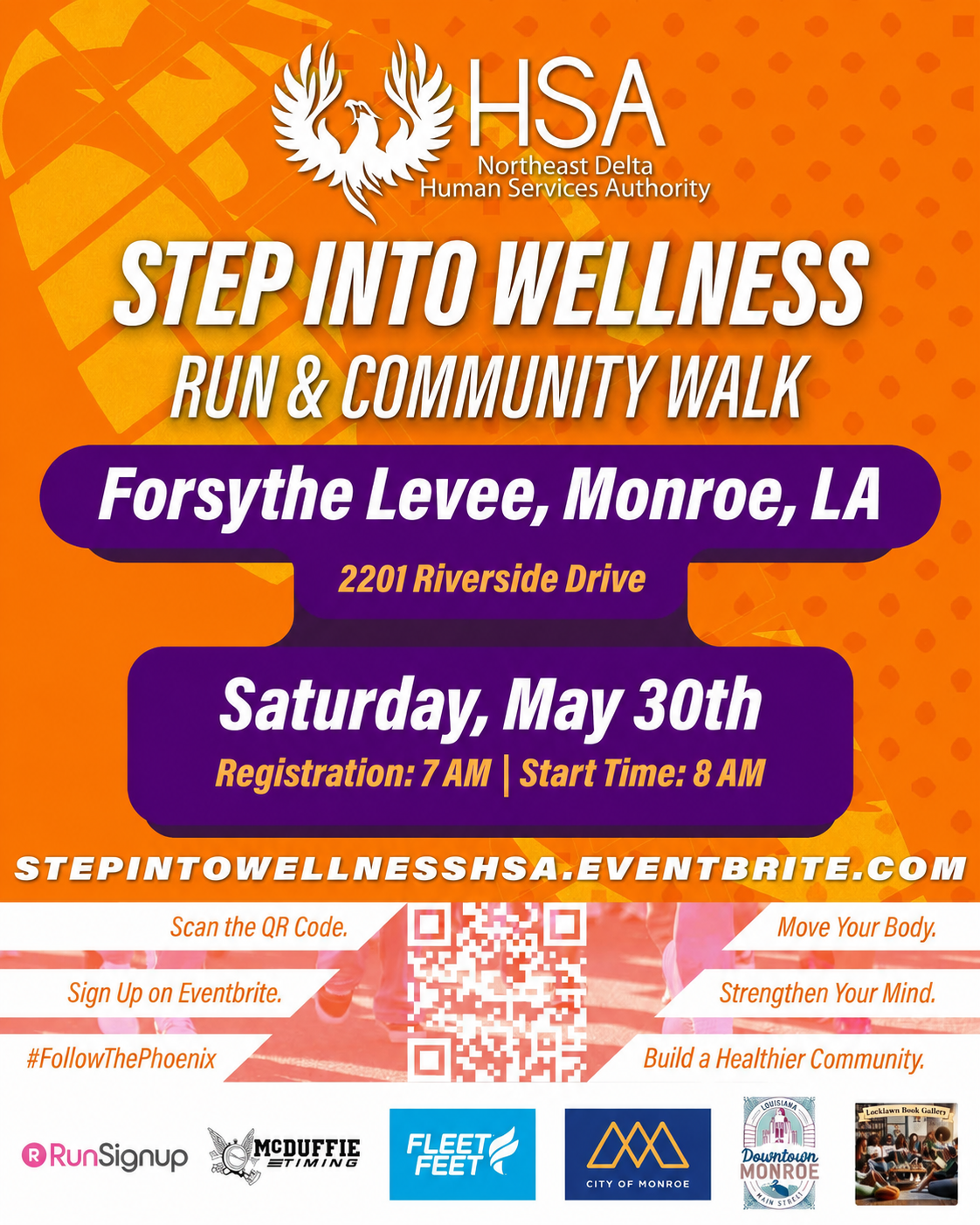
7th Annual Tallulah 5k

7th Annual Tallulah 5k

Tallulah 1K/5K Walk-Run for Wellness & Awareness Join Northeast Delta Human Services Authority for the Tallulah 1K/5K Walk-Run for Wellness & Awareness on Saturday, October
Read More »
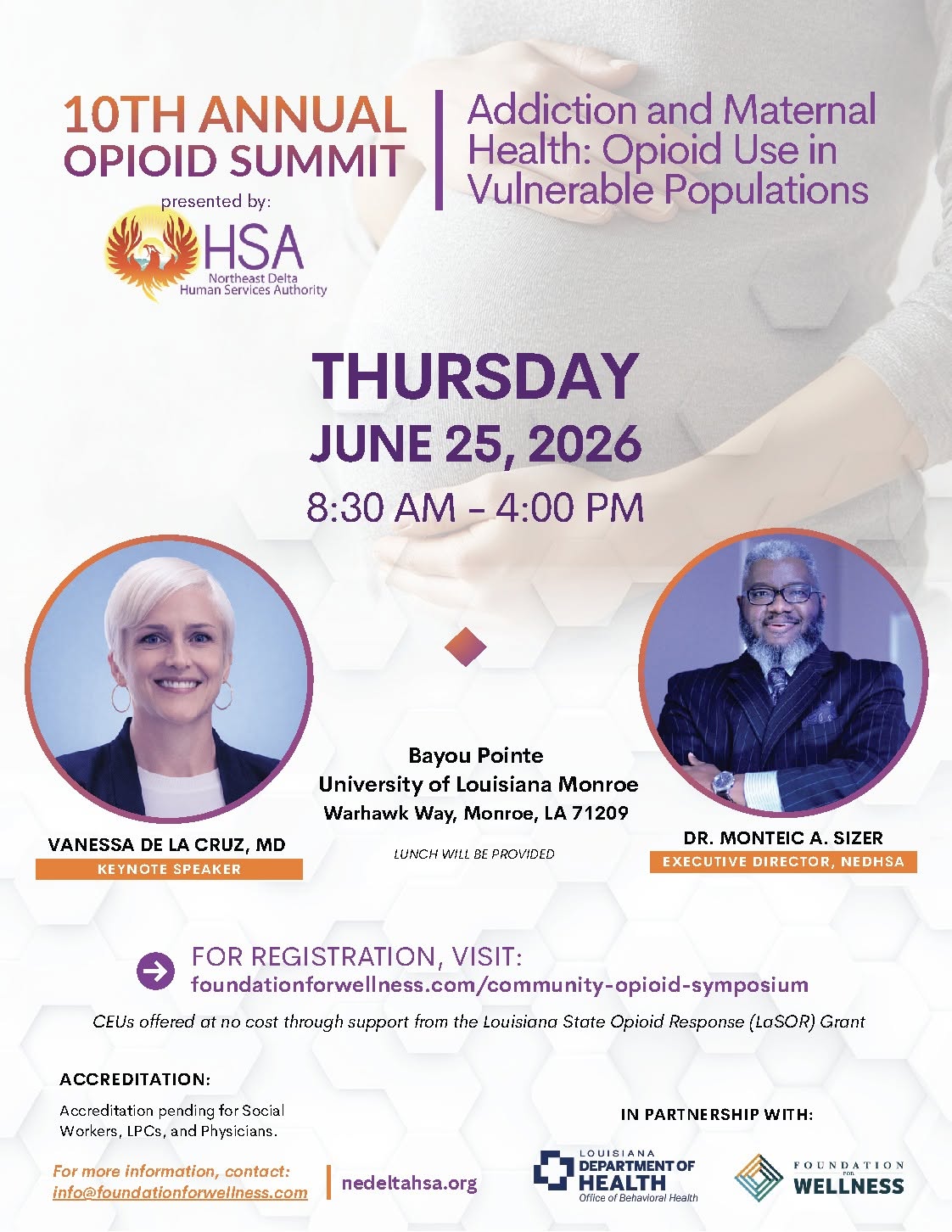
10th Annual Opioid Summit - June 25th, 2026

10th Annual Opioid Summit

NEDHSA Presents The 10th Annual Opioid Summit 2026 A Historic Opportunity to Address Addiction and Improve Maternal Health Join Northeast Delta Human Services Authority (NEDHSA)
Read More »

Latest Blog

Transformations Blog: Maternal Health Requires More Than Medical Care

A healthy pregnancy involves far more than the nine months between conception and delivery. It encompasses a mother’s physical health, emotional well-being, the environment in which she lives, the support systems available to her, and the future of the child she is preparing to welcome into the world.
For women experiencing substance use disorders, mental health challenges, or other complex life circumstances, the path to a healthy pregnancy can be especially difficult. These women often need more than individual appointments or isolated treatment services. They need coordinated care that recognizes the connections among physical health, behavioral health, social conditions, and their capacity to care for themselves and their children.
At Northeast Delta Human Services Authority (NEDHSA), we understand that improving maternal health requires looking beyond individual services to consider the full context of a woman’s life. Our partnerships with Ochsner LSU and other healthcare providers throughout Northeast Louisiana reflect a shared commitment to closing gaps in care and building a stronger network of support for mothers and families.

Read More »
A Safe Space For Hurting Women and Children

National Recovery Month: When a Person Is Ready for Recovery, Are Our Systems Ready?

There is a moment in the life of someone struggling with addiction that can change everything. It may begin with a simple realization: I have a problem. Then comes another thought: I want help. That moment matters. It takes courage to acknowledge that something is no longer working, and it takes even more courage to accept responsibility for what comes next. A person cannot change everything that happened in the past, but they can begin making different decisions today.

Read More »